
LIGHT & PLANT SCIENCE · 8 MINUTE READ
PPFD, PAR and the questions that lead to a better lighting plan.
A practical introduction for commercial growers who want to turn a lighting discussion into a more useful project brief — without relying on unverified performance claims.
01 · FOUNDATIONS
What PPFD measures
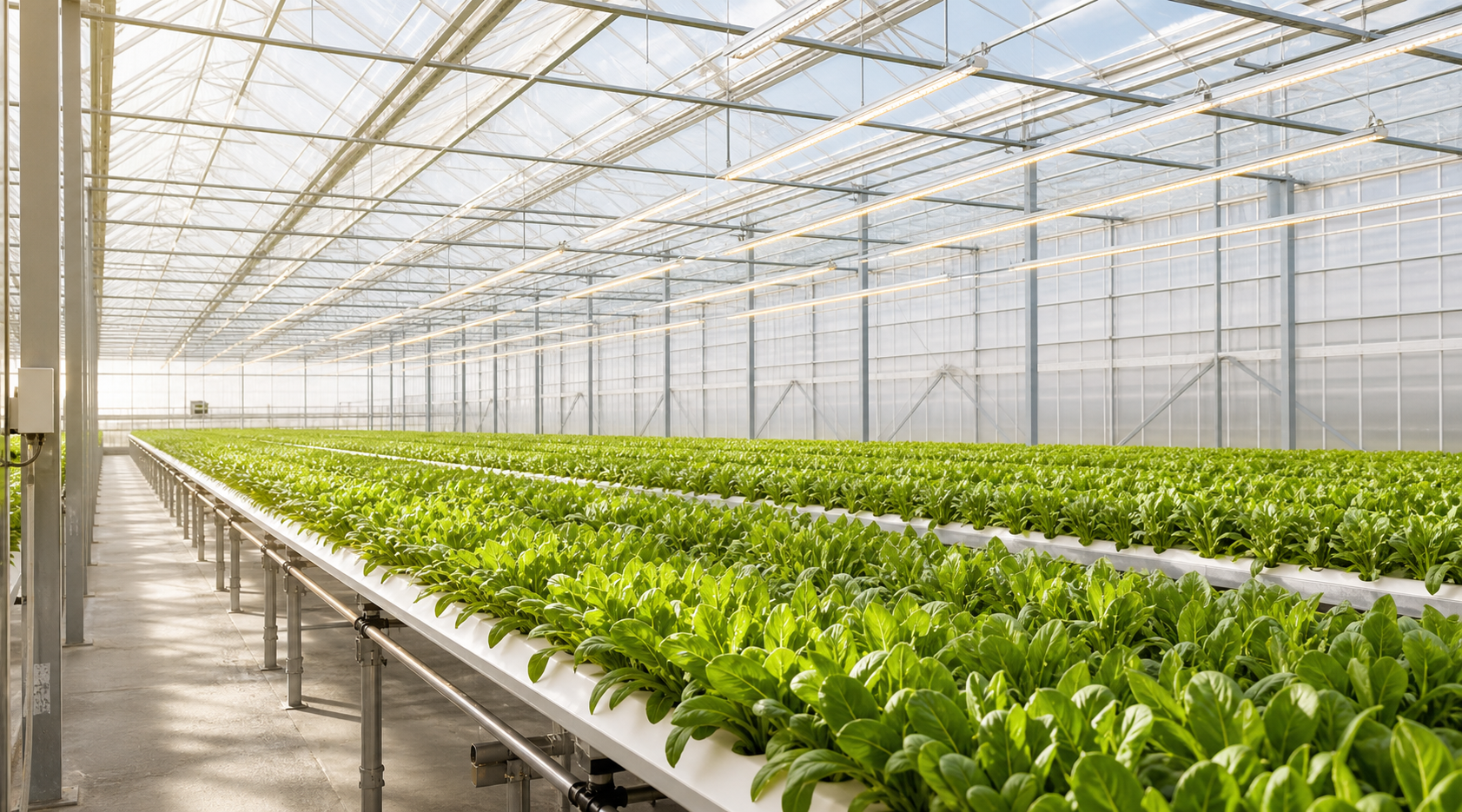
Photosynthetic photon flux density, commonly called PPFD, is a way to describe the photon quantity arriving at a target surface over time. In a cultivation setting, that surface is usually the plant canopy.
It is useful because it helps a project team move beyond fixture wattage alone. But a PPFD number is meaningful only when it is connected to a specific product configuration, mounting height, measurement approach and coverage layout.
Ask for model-specific documentation and context before using PPFD to compare a lighting plan.
02 · CONTEXT
PAR and the canopy are part of the same conversation.
PAR describes the light range plants use for photosynthesis. The canopy is where the measurement becomes practical: a distribution map can help a grower understand how light may be delivered across the growing area.
For B2B decision-making, the important question is not simply whether a fixture has a number attached to it. It is whether the measurement and the product configuration match the real facility.
03 · PROJECT BRIEF
Use PPFD as an input to the project brief.
When you contact a lighting supplier, start with crop, cultivation environment, facility size, target market and timeline. These inputs give technical discussions a clear direction and help determine which documents will actually be relevant.
- Which crop and growth stage are you planning for?
- Is the project commercial indoor, greenhouse or vertical / specialty?
- What canopy area and facility constraints should be considered?
- Which product-specific documents does your team require for review?
04 · NEXT STEPS
Move from a metric to a verified model review.
Once a project has enough context, the next step is a model-specific technical conversation. Weltesim can help route your request to the appropriate product family and current supporting documents.
Request a Commercial Quote →